

Helion Technologies, a managed IT, cybersecurity, and compliance provider that works only with automotive and heavy truck dealerships, overhauled the IT at a 14-store auto group in the San Diego area. The group’s CFO counted more than $300,000 saved by switching data carriers and consolidating equipment, plus $100,000 from renegotiated licenses: over $400,000 in dealership IT cost savings.
Last updated: November 16, 2026
“We had too many instances where our network was down for more than a day, which has a huge negative impact on our daily gross,” the group’s CFO said. “We decided we had to do something.” That’s the side of IT cost that never shows up on an invoice, and his stores had been through it more than once.
The group’s CPA firm referred him to us. This was a past engagement. Every figure here, and every quote from the CFO, is from the case study we wrote about it at the time. I’m telling it again because the money came out of places any CFO can check: the data carrier, the servers, the licenses, and the phone bill.
Dealers don’t always have an IT budget, so what we typically do first is look at everything they’re spending money on and bring it all together. That review is the front end of our managed IT for dealerships, and for this group it started with an evaluation of the existing setup by our IT consultants. Dealerships are all we’ve done for nearly 30 years, and 2,000-plus of them are under our management today.

How Did a 14-Store Group’s IT Get So Expensive?
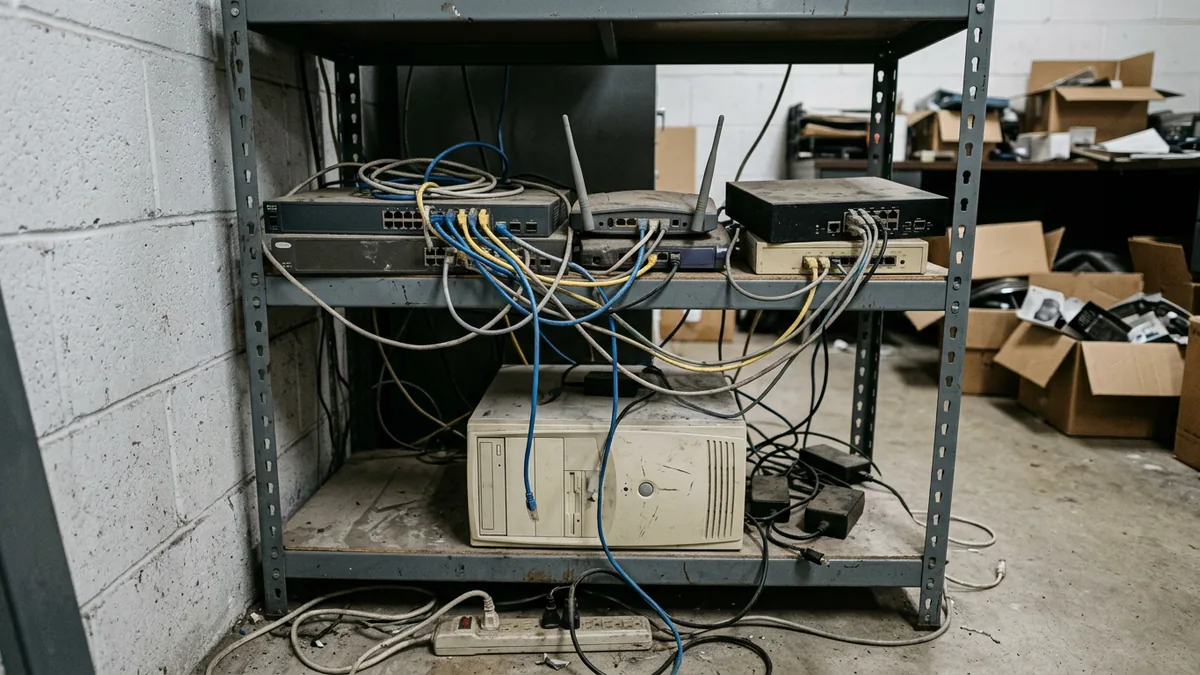
It grew one store at a time. According to the case study, the group got to 14 stores without a unified technology strategy in place, and it was living with cost overruns, security vulnerabilities, and other IT problems as a result. The CFO described it better than I can: “For years, we added equipment on an as-needed basis, so our network was a hodge-podge of PCs, operating systems, network connections, and off-the-shelf software.”
Then the growth outran the people. The group was expanding fast enough that its internal IT staff had trouble keeping up with the demands, and the case study says server crashes, network glitches, and carrier issues were adding up to more downtime and lower productivity. Email was its own headache. “Before Helion, we were having multiple email server failures that would shut us down for a day or so,” the CFO said.
Nobody in that story did anything crazy. Each piece of the hodge-podge made sense on the day somebody bought it, and nobody had the job of stepping back to look at all of it together. Who owns that? In this group, nobody did, and that’s the mess I’d want any CFO to see before signing another contract. It’s the reason we put every client on one standard.
A hodge-podge sends a bill every month.
Where Did the Dealership IT Cost Savings Come From?
“Switching data carriers and consolidating equipment has easily saved us more than $300,000,” the CFO said. Renegotiating the group’s redundant licenses was worth another $100,000, and new phone carriers saved more, which he put “in the multiple thousands of dollars.” Those are his numbers, and the first two alone add up to more than $400,000.
| What changed | What the CFO said it was worth |
|---|---|
| Switching data carriers and consolidating equipment | “easily saved us more than $300,000” |
| Renegotiating hundreds of redundant licenses with vendors | “This alone saved us $100,000” |
| Switching phone carriers | “in the multiple thousands of dollars” |
| Fewer outages | “There’s a definite return by not having those down days” |
| His two named figures together | Over $400,000 |
The stores got more bandwidth out of the deal, not less.
What Did Our Assessment Find?
Our consultants came back with four recommendations, and the case study files everything under them: switch to a new data network provider, eliminate unnecessary equipment, switch to an IP phone system, and eliminate redundant software licenses. They also found a wireless risk that had gone unnoticed. Here’s what all of that turned into at the stores.
- A new data network carrier, over fiber, at half what the old provider charged.
- Redundancy built into the new network, where most locations had been on a single internet connection for data.
- Guest Wi-Fi walled off from the internal network. Nobody had noticed that risk before the assessment.
- Servers: 36 down to 12.
- Hundreds of outdated PCs swapped for newer, faster computers.
- An IP phone system, with new phone carriers behind it.
- Hundreds of redundant licenses, renegotiated with the vendors.
Nothing on that list is exotic. That’s the point.
How Did a New Data Carrier Cost Half as Much?
We switched the group to a new data network carrier, and according to the case study it provided “1,000% more Internet bandwidth” to the stores over a fiber-optic network, at half the cost of its previous data provider. More bandwidth, half the money. Our post on how to reduce your phone and internet carrier bills makes the case for this kind of dealership carrier consolidation, with one person negotiating carrier contracts for every store and a primary and a secondary carrier behind them.
The second change mattered as much as the price. “Most of our locations had single Internet connections for data, so Helion made sure the new network had built-in redundancies,” the CFO said. In his telling, if one connection at a location failed, “another connection will instantly pick up the slack.” That’s dealership network redundancy in one sentence, and it went straight at the carrier side of the outages he’d been living with.
If you’re pricing a second line for your own stores, start with how internet failover for dealerships should be set up and tested. Faster, cheaper, and harder to knock offline.

Why Did the Guest Wi-Fi Need a Wall?
This one doesn’t show up in the savings at all, and I’d still put it near the top of the list. The assessment found a risk to the group’s wireless networks that had gone unnoticed. “They reconfigured our various wireless network access points to establish a barrier between the wireless network we used internally and the public Wi-Fi we offer customers,” the CFO said. “Had we not done that, a hacker could easily have used our public Wi-Fi to gain access to our private network data.”
He’s right. A customer’s phone in the lounge has no business sharing a network with the F&I office. Microsoft makes the same call in its network connectivity principles for Microsoft 365, which include “separating unmanaged devices to guest Wi-Fi networks” in their advice on network security. Keeping the two apart is part of our dealership network management at every store, and it’s one of the first things our assessment checks.
Wi-Fi for customers shouldn’t come with a door into the back office.
Why Cut 36 Servers Down to 12?
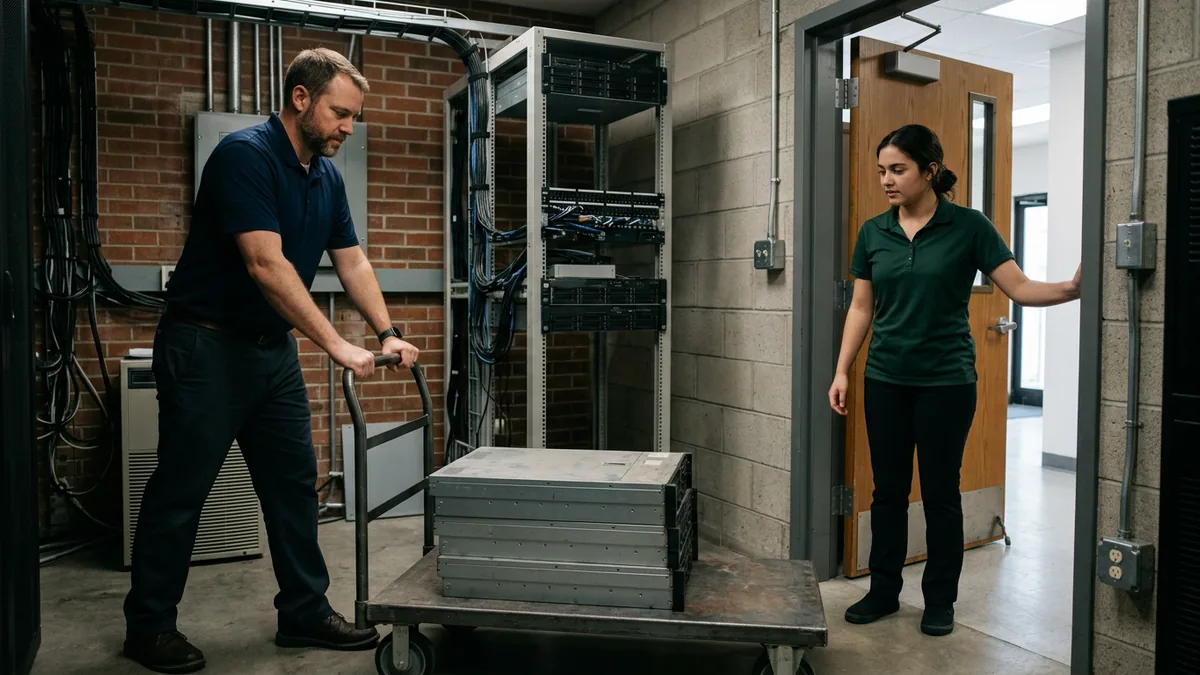
Because 24 of them weren’t earning their keep. The group had 36 servers, including servers that moved data from store to store and from the dealer management systems to the OEMs, and we brought the count down to 12. The case study’s wording is careful: the cut came “maintaining functionality while eliminating waste.” Every server you keep is one more machine to patch, back up, and eventually replace, which is why I’d ask any group with a server count in the dozens what each one actually does.
We also replaced hundreds of outdated PCs with newer, faster computers, and the case study credits that with higher employee productivity and a more secure network. If you’re counting old machines at your own stores, start with Windows 10. Microsoft stopped supporting Windows 10 on October 14, 2025. A machine still on it gets no more security fixes from Microsoft unless it’s enrolled in Extended Security Updates.
Less hardware did the same job.
Where Did the License and Phone Savings Come From?
The licenses were the quiet money. In the initial assessment we found hundreds of redundant licenses in the group’s systems, and we used our experience and industry knowledge to renegotiate them with the vendors. “This alone saved us $100,000,” the CFO said. I’d bet it’s the same as-needed buying he described, showing up on a different bill.
If your group runs Microsoft 365, this is an easy place to start. The Licenses page in the Microsoft 365 admin center, under Billing, shows how many licenses you hold for each product, and it’s worth holding that number up against the people who actually log in. It matters more this year. Microsoft’s price update for select Microsoft 365 commercial suites took effect July 1, 2026, and existing customers stay on their current pricing only until renewal.
The phones were smaller money. The assessment recommended an IP phone system, and switching phone carriers saved the group “in the multiple thousands of dollars,” according to the CFO. I’d rather show you a real number like that than round it up into something bigger. Our page on dealership IT vendor consolidation shows what happens to each of those bills once one team takes them over.
Redundant licenses don’t announce themselves. Somebody has to go count them.

What Did the CFO Say When the Work Was Done?
He didn’t lead with the savings. “If systems go down, our dealers can’t write repair orders or sell vehicles,” he said, and then he got to the money: “Partnering with an MSP has saved us hundreds of thousands of dollars and many headaches, while allowing us to focus on doing what we do best: selling cars.”
A dealer friend of mine wrote a book about finding your one thing. His was selling and servicing cars. Mine is taking care of the IT, which is why I liked how the CFO ended it.
Selling cars is the job. IT is supposed to stay out of the way.
How Much Does Managed IT Cost for a Car Dealership?
There’s no single price, because a dealership’s number comes from four things: how many rooftops you run, the people and devices to support, the plan and services you pick, and the shape your systems are in when we start. Our guide to dealership IT support cost walks through each one.
Helion Technologies doesn’t publish a price list. We build a group’s number after we’ve seen its stores, then set it next to every IT bill the group already pays, carriers and license renewals included, which is the same kind of look that turned up this group’s $400,000. When you pay the number, the number’s the number.
Fair Questions About These Numbers
Would the same changes save my group $400,000?
Did going from 36 servers to 12 mean giving something up?
Could our own IT person have found savings like these?
Is a second internet line at every store worth paying for?
Start With What You’re Already Paying
This group was in the San Diego area, and if your stores are too, our page on dealership IT services in San Diego covers what’s specific to that county. We support dealerships anywhere in the U.S., though, and if your stores grew the way this group’s did, one purchase at a time, some of that money may be sitting in bills you’re paying right now.
Our Complimentary IT & Cybersecurity Assessment is a no-cost, no-obligation review of your current technology, security posture, and vendor spend, and it stacks the bills you pay every vendor today against what a single accountable team would cost. A written report goes to whoever needs to see it.
Every dollar of that $400,000 came out of costs the group was already carrying.