

When a dealership calls our IT support team during live support hours, a US-based technician picks up in 82 seconds on average. It’s a real person who knows dealership systems and how a store runs, not a voice agent.
Last updated: November 2, 2026
Picture a Tuesday in the service lane. It’s 8:20, there are nine customers standing at the write-up desk, and the printer that spits out repair orders has stopped talking to anything. Your service advisor picks up the phone and calls IT.
What happens in the next two minutes tells you more about your IT provider than any proposal ever will.
I spent five years selling CRM software to dealers before I came to Helion, and I’ve watched a lot of dealers buy technology. They compare price per seat. They compare tool lists. Almost nobody asks the question they’ll live with every day after the contract is signed, which is who picks up when the store calls. When you buy managed IT for your dealership, the people are the product. The rest is plumbing.
So here’s who answers at Helion, how we hire them, and what I’d ask any provider before signing.
What an IT Support Team Actually Is
An IT support team is the group of people who take a business’s calls and tickets, fix what they can on the spot, and pass the rest up a defined ladder to engineers and field technicians. At a dealership, that team is the difference between a five-minute fix and a lost morning in the service drive.
Most dealers have only ever seen one end of it. A voice on the phone, a ticket number in an email. The ladder behind that voice is where the real differences between providers live, and it’s almost never in the sales deck.
One person can’t be the whole ladder either, and that’s the trouble with the one IT guy who knows everything, because he’s great right up until he’s on vacation, or out sick, or on the phone with your other store. If you’re hiring that person anyway, our IT manager job description shows which duties one hire can own.
Ask who’s behind the voice.

A Live Person or a Voicemail. That’s It.
We don’t use voice agents or AI to answer the phone. When I was asked about it on a recent call, I put it about as plainly as I could: “It’s either you get a live person or you leave a voicemail and then we’re monitoring that voicemail and call people back.”
Our help desk is live Monday to Friday, 8 a.m. to 5 p.m. local time, and Saturday, 8 a.m. to 5 p.m. Eastern, with callbacks on weekday mornings and evenings. During live support hours, a technician picks up in 82 seconds on average. Outside them, you leave a message, we’re watching for it, and a technician calls you back.
I’ve heard what a phone tree does to a service manager who’s already behind. It doesn’t go well for the phone tree.
The people answering are all US-based, onshore. That’s not a patriotic slogan. It matters because the person on the line knows what a franchise store looks like on a Saturday, what a DMS is, and why the F&I office can’t wait until Monday. The full breakdown of hours, callbacks, and response targets is on our dealership help desk page, and it’s worth reading before you compare us to anybody.
A person answers. That’s the whole point.
Who We Hire, and Where They Sit on the Ladder
The Bureau of Labor Statistics counted 903,100 computer support specialists in the United States in 2025, and it projects that number to shrink 3% by 2035. It still expects about 48,700 openings a year, and every one of them comes from replacing people who leave the field. So every provider you talk to is hiring all the time. Fine. The better question is what they hire for.
We hire for two things at once. Technical skill, obviously. And an understanding of how a dealership actually runs, because a technician who knows the systems but not the store will fix the wrong problem first. Friendly helps too. Your people are calling us on their worst morning.
Rex Marchant, our Vice President of Service, has posted Helion’s openings on LinkedIn since 2019: a systems administrator in Dallas or Baltimore, IT project managers, a remote Tier 1 service desk team in 2021 that could be “located just about anywhere in the country,” and in 2022 everything from front-line support through systems and field engineers. You can see the roles we’re filling now on our careers page.
Here’s how those roles line up when your store calls in.
| Who | What they handle | When you meet them |
|---|---|---|
| Desktop Support technician | Every call and ticket starts here: triage, printers, logins, the everyday fixes | The first voice you hear |
| Desktop Support Lead | Picks up anything the technician can’t solve in 15 to 30 minutes | When the fix isn’t quick |
| Second-level support or a System Administrator | Servers, accounts, network and the deeper problems | After the Lead escalates it |
| Systems Engineer | Owns every emergency through to resolution | When a whole department or store is down |
| Field technician | Hands-on work in the building, included on our Full Service plan | When the problem is physical |
| Client Technology Manager | Your escalation contact for any ticket that needs attention | Whenever you need someone to push |
Rex has written up how a ticket climbs that ladder in more detail in IT support tiers explained for dealerships. I won’t repeat it here.
Six roles. One phone number.

How a Dealership Technician Gets Better
Nobody walks in the door knowing dealerships. Not really.
A certification teaches you how a network is supposed to work. It doesn’t teach you that the parts counter runs on a different rhythm than the showroom, that a desk in F&I going down at 4 p.m. on the last day of the month is a different emergency than the same desk at 10 a.m. on the 3rd, or that the OEM’s diagnostic tools in the shop have their own rules about what they can connect to. A technician learns that by working dealership tickets, a lot of them, for dealerships that run Tekion, CDK, Reynolds, and everything else out there.
That’s the part of development I care most about as somebody who sells this. We look after the technology at 2,000-plus dealerships and about 35,000 dealership employees. When your store calls with a strange printer problem in the service lane, there’s a decent chance one of our people has seen that exact problem at another store. Scale isn’t a bragging point. It’s pattern recognition, and it makes every call a little shorter.
You can see it in our reviews, too. We hold a 4.9 rating on Google across more than 200 reviews, and those reviews name more than 15 different technicians. Not one hero carrying the place. A bench.
The bench matters more than the star.
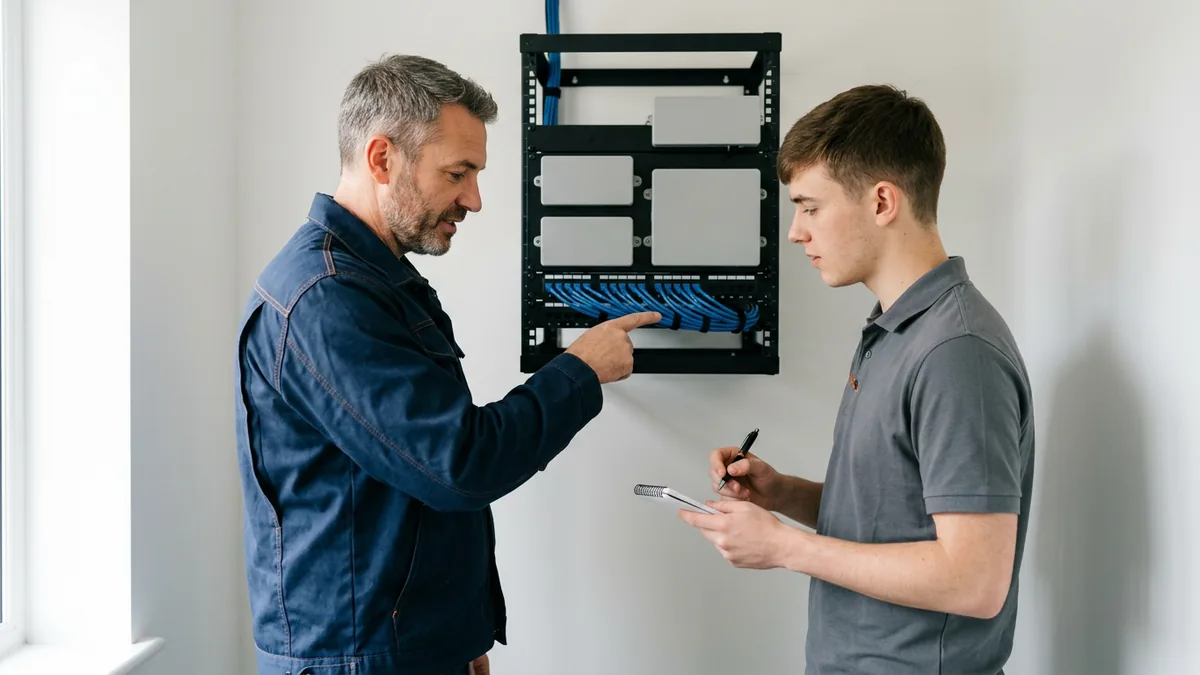
Why Knowing Your Store Shortens Every Call
Think about the last time somebody at your dealership called a generic help line. The first ten minutes probably went to explaining what a DMS is, why the service drive can’t just restart everything, and which of the dozens of vendors a dealership runs actually owns the thing that broke.
A technician who already knows all of that skips straight to the fix, and if it can be fixed remotely, they’re working on it while your advisor is still on the line with the customer standing at the desk. If it needs hands in the building, they say so and the ticket goes to field service, and you can read more about how we make that call in onsite vs remote IT support at the dealership.
That’s also why our clients stay. Our client retention rate is 98%. I’d love to say that’s because of our tools, but it isn’t. It’s because the people picking up the phone know the business they’re supporting, and because dealers get tired of explaining themselves to somebody new every week.
We manage the technology so they can sell and service cars and heavy trucks. That’s the job.

What to Ask Any Provider About Who Picks Up
Whether you end up with us or somebody else, I’d get these answered before you sign:
- Does a person answer when your service advisor calls at 8:15 on a Tuesday, or a menu, or a voice agent?
- The after-hours callback windows, in writing, with time zones and the provider’s definition of a weekend emergency.
- Who owns an emergency, and who you call when a ticket stalls. A role with your account in its job description.
- Onsite help: in the plan, or billed on top?
One more, and it’s my favorite. Count how many different technicians get named in their Google reviews, because one name in every review tells you the place runs on one hero and you’re going to be waiting on his calendar.
If a provider gets uncomfortable with that list, you’ve learned something. Our company page has more on who we are and how long we’ve been doing this, since 1997, if you want to check us the same way.
What Dealers Ask About Our Support Team
Is Helion’s help desk based in the US?
Do you use AI voice agents to answer support calls?
I call at 7 p.m. on a weekday. Then what?
Will I talk to the same technician every time?
Are field technicians part of every plan?
Start With Who Answers
When things aren’t going my way, I ask myself one question: what am I not doing? For a lot of dealers, the answer is that they never looked past the price sheet to the people. Do that first. The tools will sort themselves out.
With 16,991 franchised light-vehicle dealers in the country, according to NADA Data, you have no shortage of IT providers calling you. The good ones will be happy to tell you who answers.
If you want to see how your store would look to our team, start with a complimentary IT and cybersecurity assessment. We’ll look at how your stores are set up today and tell you plainly what we’d do first, so you can get back to focusing on sales and service with some peace of mind.