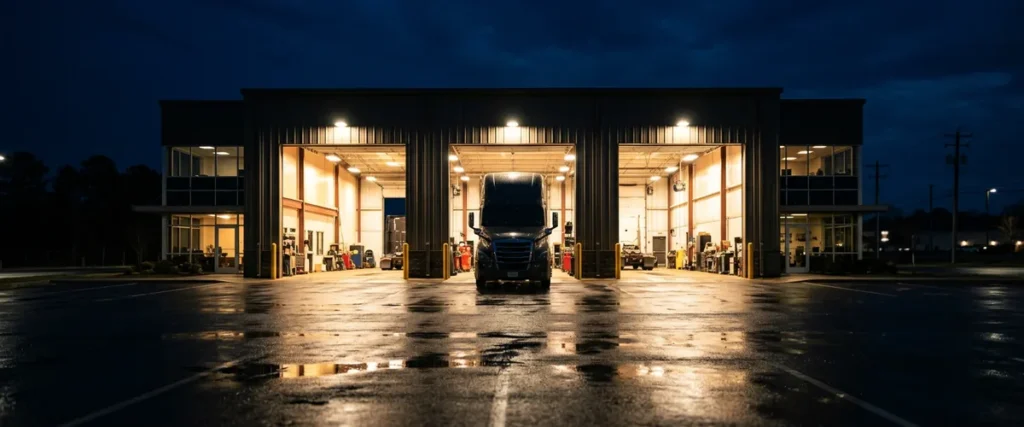

After-hours IT support for a truck dealership is live help for the service bays, parts counter, and DMS during evenings, weekends, and holidays, so a night-shift problem gets fixed that night instead of waiting for the morning crew.
Last updated: October 28, 2026
It’s 9:50 on a Thursday night. A tractor with a load due in Memphis by morning is up on the lift, the technician has found the problem, and the parts counter can’t pull up the order in Karmak Fusion because the session keeps dropping. The service manager went home at 6. The front office went home at 5.
So who do they call?
That’s the whole question behind after-hours IT support. I’ve spent more than 25 years leading managed services teams, and what I’ve learned over time is that the hard part is rarely the fix. It’s the gap between the moment something breaks and the moment somebody who can fix it actually picks up the phone. At a truck store, that gap can sit right in the middle of the busiest work of the day, because the busiest work of the day often happens at night.
What After-Hours IT Support Means at a Truck Dealership
After-hours IT support is help with technology problems that happen outside an office’s normal business day. For a heavy truck dealer, it means live support for the systems the night and weekend shifts depend on: the DMS, the parts counter, the shop’s network and phones, and the accounts technicians use to sign in.
That’s the textbook version. The practical version is simpler. If your bays are open, your IT support should be too.
Truck Service Keeps a Different Clock
Car stores usually close the service drive by early evening. Truck stores often don’t. The Bureau of Labor Statistics says plainly that some repair shops extend their service hours into evenings and weekends, and that some truck and bus repair shops provide 24-hour maintenance and repair. Diesel technicians and mechanics held about 316,000 jobs in 2025, and some of that work happens while the office staff are asleep.
Trucks run on the driver’s schedule and the freight’s schedule. Not the dealership’s.
When the systems fail at night, good crews improvise on paper ROs. They shouldn’t have to.

What Breaks on the Night Shift, and What Should Happen Next
| At 10 p.m. | What good after-hours support does | What can wait for morning |
|---|---|---|
| Karmak Fusion or Procede Excede won’t connect at the counter | Checks whether it’s the store’s network, one workstation, or the DMS itself, and gets the counter working again | A vendor ticket for a bug that only the DMS provider can fix |
| A technician is locked out after a password change | Verifies the caller, then resets the account so they’re back at work | Reviewing why the password policy caught them off guard |
| The parts counter printer or label printer stops | Remote troubleshooting, or a workaround to another printer | Replacing hardware that keeps failing |
| The internet circuit goes down | Confirms the outage, moves the store to its backup line if it has one, and opens the case with the carrier | The conversation about why the store has no backup line |
| Phones stop ringing at the service desk | Restores call routing so drivers calling in can reach someone | Cleaning up the call flow |
| A strange pop-up, or files that suddenly won’t open | Treated as a security event right away, not as a ticket for tomorrow | Nothing. This one never waits |
I spend a fair amount of time thinking about that third column. Nearly everything in it is root-cause work, the kind I’d rather do in daylight with the right engineer and the store’s own people on the call, not at 10 p.m. with a tech who wants to get back under a truck. ITIL, which is the framework I trained on, draws the same line between restoring service tonight and chasing the underlying problem later. One doesn’t replace the other. Order matters.
Quick fix tonight. Lasting solution tomorrow.
“After Hours” Shouldn’t Mean a Voicemail
Every IT provider says it offers after-hours support. What does that actually mean? Ask, and the answer is often a voicemail box, an answering service that takes a message, an on-call technician who calls back when they can, and a separate rate for the trouble. For a store that does real work at night, that’s not after-hours support. That’s an after-hours message.
Here’s how we’ve set it up at Helion. Our help desk is open whenever dealers are open, 7 days a week. If the night shift is working, so is the help desk. A live technician answers in 82 seconds on average, and after-hours emergencies, weekend support, and field support are all covered at no extra charge. We close only on Christmas Day and Thanksgiving Day, and we stay open on July 4th and Labor Day on purpose. You can see the details on our dealership IT help desk page.
The credit for those 82 seconds belongs to the people doing the work. I get to talk about it. The technicians on the desk are the ones who answer at 10 at night and treat the call like it came in at 10 in the morning.
Same standard, every hour the store is open.
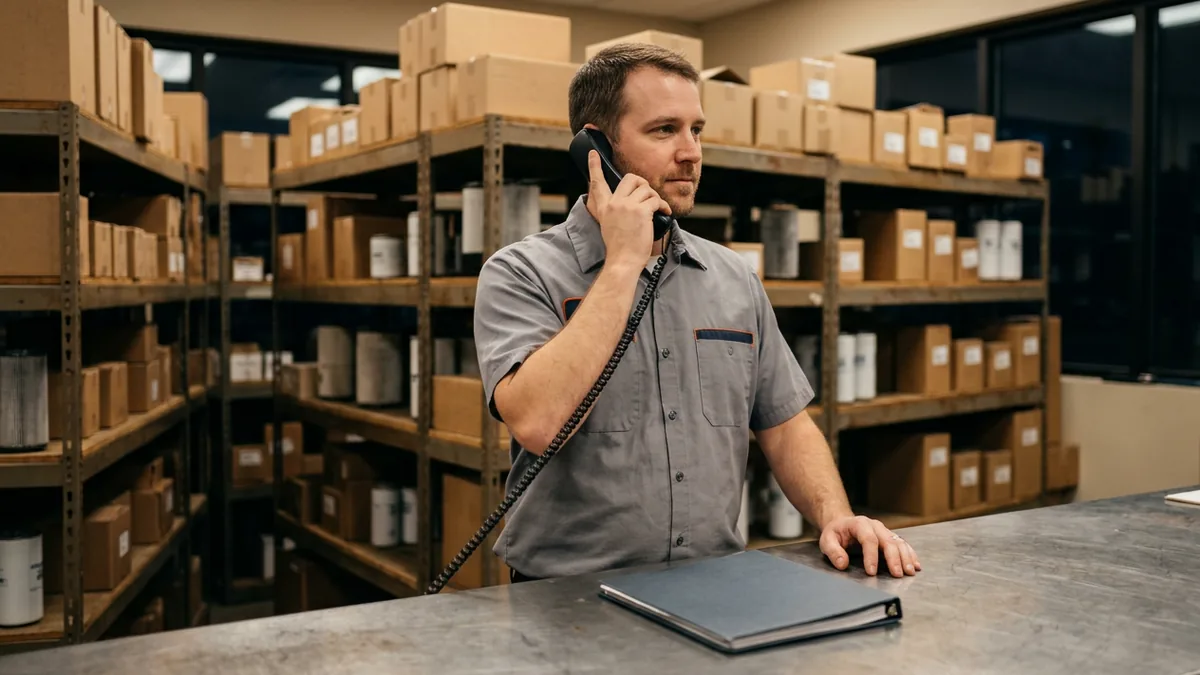
Security Doesn’t Keep Store Hours Either
There’s a second kind of after-hours problem, and it isn’t a printer. In an advisory titled Ransomware Awareness for Holidays and Weekends, CISA and the FBI reported an increase in highly impactful ransomware attacks on holidays and weekends, when offices are normally closed. The example they cited was the Fourth of July holiday in 2021.
Attackers pick quiet hours for a reason. Fewer people are watching.
That’s why I keep two things separate when I explain our coverage. The help desk is open whenever dealers are open, 7 days a week. Security support runs 24/7: live, US-based analysts monitor your systems and step in the moment they see signs of an attack, whether or not anyone is in the building. A night-shift tech who sees something odd should still call the help desk right away, and the help desk hands it to our cybersecurity team. But the monitoring doesn’t depend on someone noticing.
Different jobs, different clocks. Both covered.
What to Set Up Before the Night Shift Needs It
A night call rarely runs long because the problem is hard. It runs long when the first ten minutes go to finding the number, then confirming the caller is allowed to ask, then working out which internet line the store is actually on. Every one of those can be settled on a Tuesday afternoon.
Start with the number. It belongs on the wall in the shop office, at the parts counter, and in the contacts of every shop phone, not just in the service manager’s email signature.
- A short list of who on the night shift can call and ask for changes. We verify every caller (our post on help desk identity verification explains how), and a lead tech who isn’t on that list is going to get slowed down at the worst possible moment.
- One spare workstation at the parts counter, already set up.
- The store written down: primary and backup internet, the network closet, the DMS vendor contact, which printer feeds which counter. Here’s what IT documentation for dealerships should hold.
Outlying branches need the same, plus a couple of staged spares, which our guide to IT support for remote truck dealership branches goes through in detail.
What happens if we do nothing? Usually nothing, for months. Then one night the counter goes down, nobody can find the number, and a whole shift learns the gap the hard way.
An afternoon of setup saves a night.
Test the Promise Before You Need It
If you’re judging an IT provider’s after-hours support, mine included, I believe the fairest test is the simplest one. Call it. Call at 9:30 on a Tuesday night and at 7 on a Sunday morning, and see who answers, how long it takes, and whether that person can actually do something. Then ask a few questions in daylight.
Does a live person answer, or does a recording take a message? Is after-hours work billed separately, and is field support extra? Who on their team knows Karmak or Procede, or whichever DMS you run? If a night-shift call turns out to be a security problem, who takes it from there, and how fast? And what happens on a holiday weekend?
Are you fixing the cause, or working around the symptom? A provider that answers those questions plainly is probably the one that’ll answer the phone, too.

What Truck Dealers Ask About Night Coverage
Our shop runs until midnight. Will anyone actually answer at 11:30?
Is after-hours support an extra charge?
Can the help desk fix a Karmak or Procede problem at night, or do we wait for the DMS vendor?
Who should be calling, the night foreman or a manager?
Is the 24/7 security monitoring the same thing as the help desk?
Support That Works the Same Hours Your Bays Do
It’s easy to treat the night shift as the exception. At a lot of truck stores, it isn’t. The evening is often when the real volume moves, and the IT support behind it ought to keep those same hours, put a live person on the line, and handle things in the right order, with the quick fix that night and the root cause the next day.
If you’d like to know how your stores would do on a busy Thursday night, our complimentary IT and cybersecurity assessment looks at your support coverage, your documentation, and how your stores are protected once the office goes home. Our engineers do the work. You get the findings in writing, in plain language, with a next step attached.
Your bays set the hours. Your IT support should keep them.